WRITING AFTER SUNSETS
For years, I maintained a separate blog called writing after sunsets as a place for my thoughts on writing, reflections on teaching, and an outlet for writing that matters to me in ways that make me want to control how it is published. It has also been, from time to time, a platform for the work of others I know who have something to say.
Now, with this site as my central base of online operations, I’m folding that blog into the rest of my efforts. All previous content is here for easier access, but the heart of writing after sunsets remains in both my earlier posts and those to come.

Leaving people you actually like…
Being cut off from all these friends has me thinking about what it is to leave behind people we actually like when a job ends. Call me sentimental, but this is one of the externalities of being laid off, an emotional cost paid by former employees their company will never see.
Like visiting a house no longer a home.
Part 9 in this series.
I came to the university I was just ejected from at their request. When the call came, I was teaching at another school. On the water in San Diego of all places.
But this was my alma mater.
And so I took the job, a chance to work in the place where professors had helped a lost 19-year-old me find direction. The decision felt (and still feels) right. But it also makes leaving much harder.
Many of my colleagues were once teachers and mentors of mine. I made friendships over my decade there; celebrated and grieved life’s milestones with many of those people.
Being cut off from all these friends has me thinking about what it is to leave behind people we actually like when a job ends. Call me sentimental, but this is one of the externalities of being laid off, an emotional cost paid by former employees their company will never see.
Sure, that’s life. Sure, the internet and coffee shops still exist for continuing those relationships. Sure, none are promised more than the season we get with people. As Frost put it, “way leads on to way.”
But we all know what happens at the end of school. We say we’ll keep in touch, believe our lives will remain interconnected. But that doesn’t always (or often) hold true, especially when leaving the daily rhythms of those relationships was not our choice.
And so, we need to grieve. But what does that look like in a professional context?
For me, it meant writing my closest peers a letter, by hand, letting them know what I was specifically grateful for when it comes to their place in my life. I left them on their desks late the night I finished packing up my office.
Did they make the pain of leaving less? Not really.
Am I seeing some of the early signs of the post-separation drift I described above? Yes.
The wash and tide of my new stage of life pulls at me every day. I just hope it doesn’t wash me ashore so far from my past I have to carry it for myself.
Zombie work
But the long pause before leaving was exhausting. I hope not to do that again.
When finishing is wandering gray-scale days.
Part 8 in this series.
There’s something uniquely painful about running out the string as a full-time professor who knows they’re being pushed out the door at the end of the term months before that final push comes.
For clarity, I was informed I was losing my job at the beginning of February, meaning I had to teach through early May before doing the work of clearing out of my office and former life. (link to 2nd post here)
A caveat: I am aware there is a level of privilege in having a contract the school must honor for several months after laying a person off. No immediate stop. No last check slid across the table in the awkward minutes surrounding the news. A bit of a cushion in terms of time to look for a new job.
These are all good things. And yet…
Being a professor—one who’s engaged and actually good at what they do—is more demanding than people think. I routinely worked 50-60 hours a week during the school year and that didn’t change my last term in the classroom.
What did change is how every day felt.
If you’re at all good at your job, people won’t understand why you were let go. And because they don’t understand, it makes talking to you awkward for them. They don’t want to cause you pain, nor think about the prospects of their own position being eliminated.
And then there are your students. I was committed to giving them the same quality instruction and attention I tried to bring to every class I designed and taught. The cognitive dissonance of that effort during my last term was exhausting.
Add to that the process of students finding out—typically one or two at a time—and then wanting to process their feelings about my dismissal with me. Rinse and repeat every few days for the three months I had left of the term.
Listen, I loved my students and my colleagues. More on that in my next post.
But the long pause before leaving was exhausting. I hope not to do that again.

The State of (Your) Industry
I don’t know what that means, because I don’t know what that future looks like. And I’m don’t believe the people who made that pronouncement know either.
This feels like an apt metaphor for the current state of higher education.
Continuing some thoughts from the last entry, it’s no secret higher education is in flux. People like to think it’s simply a product of changing technology and inflationary cost increases.
Of ideological and cultural realignment.
Of shifting market forces and expectations.
Of the adoption of a customer service model and the decades long effort to defund public education.
Of disconnection from fiscal realities and demographic cliffs.
Maybe it’s all these things. Maybe it’s none.
Maybe it’s the fact that higher ed was never supposed to be job training and simply trying to add being a certification device to its original design has led to its undoing.
Maybe it’s the standard process of moving career educators into administrative roles that require different skills set than they possess.
Maybe it’s the more recent trend of handing those administrative roles to private sector executives with zero understanding regarding the point of education.
Maybe it’s the willingness of people on all sides to make their takes on college education political punchlines and punches thrown.
Maybe the system really must move to embrace a 21st century ethos if it’s going to survive.
Maybe we are on the precipice of losing the very real benefits of humans being educated on how to be better humans by other humans.
The state of the union in higher ed is more shadow than light.
More questions than answers.
More business than usual.
More worry than momentum.
More corporate than collective.
I don’t know the upshot of these musings. All I know is contained in the last line of the meeting informing me that my position was being eliminated.
“You simply don’t fit the direction the school is headed.”
I don’t know what that means, because I don’t know what that future looks like. And I don’t believe the people who made that pronouncement know either.
Signal to noise ratio: job searches in the age of AI
Get a little more granular and my field within the humanities is perpetually denigrated as unnecessary (by people who live and die filling the voids in their lives with creative works, I might add).
Here’s to still finding humor in the process, I guess?
Part 6 in this series.
This Is a bit of a part two to this entry.
Getting laid off is never a good thing. Sure, in some cases it can become one. But in any economy, abruptly losing a job puts the vast majority of people in a tough place.
But then there are times like the ones we find ourselves in. Terrible, in historic terms. Terrible, also, in pragmatic and present tense terms. Bleak even.
A snapshot from the day I’m writing this entry:
“The US unemployment rate rose to 4.3% in August of 2025 from 4.2% in the previous month, aligning with market expectations to reflect the highest proportion of joblessness since October of 2021. The number of unemployed increased by 148 thousand to 7.384 million in the period. In turn, the labor force increased by 436 to 170.778 million, driving the labor force participation rate to increase by 0.1 percentage point from the over two-year low in the previous month to 62.3%. The broader U-6 unemployment rate, which includes discouraged workers and those working part-time for economic reasons, rose to 8.1% from 7.9% in July.” From: U.S. Bureau of Labor Statistics
Big numbers, trending in the wrong direction. But what does this look like for job seekers on the ground level? Here’s one breakdown:
You need approximately 42 applications to land one interview in 2025, with only 2.4% of candidates reaching the interview stage
Only 3% of job applicants get called for interviews according to recent data, making the competition fiercer than ever
Companies receive an average of 250 applications per job posting, but referrals increase your chances by 18x over cold applications.
Ok, sure, these are macro numbers spread across the entire market. How about the field I’ve been in for the past two decades and am most overtly qualified for? Yeah, about that…
“In the next few years, graduate students and postdocs will very likely face the worst job market in a generation….Faculty hiring will almost certainly be at a near standstill in the next academic year. In other economic downturns — such as the Great Recession of 2008 or the Covid pandemic — graduate students could extend time in their programs or move into postdoc positions. But this time, federal cuts have eliminated many postdoc positions and constricted funding for existing graduate students. A shrinking federal work force means fewer job opportunities in that sector for Ph.D.s. And uncertainty caused by tariffs and the trade war threatens to slow hiring in the private sector.”
(Un)fun Fact: I came out of graduate school in the last “worst job market in a generation!” But this time around, I’m a mid-career professional let go late in the cycle, a fact that makes my prospects of getting hired by another institution shakier. This is why the near misses I had just after being let go stung an extra amount.
And these last projections are about higher education in general. Drill down on the humanities, which have been intentionally misunderstood and attacked by outside forces and those who control university purse strings for decades.
Get a little more granular and my field within the humanities is perpetually denigrated as unnecessary (by people who live and die filling the voids in their lives with creative works, I might add).
I guess there’s not a lot of mystery in determining why I’ve had a perpetual upset stomach since that meeting with my dean in January.
Equally obvious is how important the encouragement of my friends and professional connections have been, even if only as floatation devices tossed into the water mid-storm.
So, what’s left to do? Drop more applications, of course. That 42 per interview target isn’t going to hit itself.

Near misses (in my field)
This was likely my lowest moment while working through my anger and frustration with the situation.
There’s something uniquely disconcerting about familiar views obscured by a different angle.
Part 5 in this series.
In the month after my meeting with HR, I found two open jobs in my field at universities in my area. This was wild given the hiring cycle for professorships usually starts in September and is wrapping up by the end of February.
In other words, if you aren’t in the process in the fall, you’re stuck waiting for the next year’s jobs to try again.
So those two job possibilities felt like a gift (even if one of them was at the school that had just let me go…more on that later). I applied to both and got initial interviews.
And then came the saga of two processes travelling very different paths to the same destination.
The first job was in my field and a weirdly perfect fit. Creative writing was the top need. Check (my PhD emphasis). And journalism. Check (my first career). And be versed in Latinx literature. Check (not my primary field but I’m more than casually familiar). And the candidate needed to teach composition. Check (20+ years of that under my belt).
My preliminary interview became a finalist’s visit to campus and I did well. Signs pointed to me being the choice. And then things got weird. One faculty member from a completely different field of study didn’t like something I said. (Nothing inflammatory, just a take that differed from his.)
And that was it. They passed on me and pulled the search completely, opting to start over with new applicants in the fall. That email stung for sure.
At the same time, the school I already worked for—the one that cut my position—encouraged me to apply for a different one. Despite my misgivings, I did if for no other reason than it would mean the least upheaval for my family in the short term.
Here too, I was a finalist. Did seven hours of interviews, mostly with people who already knew me. Was the initial choice again. But the administrators in charge held their decision for two months, kept taking applications, and then told me no just before my son’s high school graduation.
And that was that. Academia’s door closed for at least a year, and that’s if I can (and want to) get back in. This was likely my lowest moment while working through my anger and frustration with the situation.
It was also a punctuation I apparently needed, the period on my last 15 years.
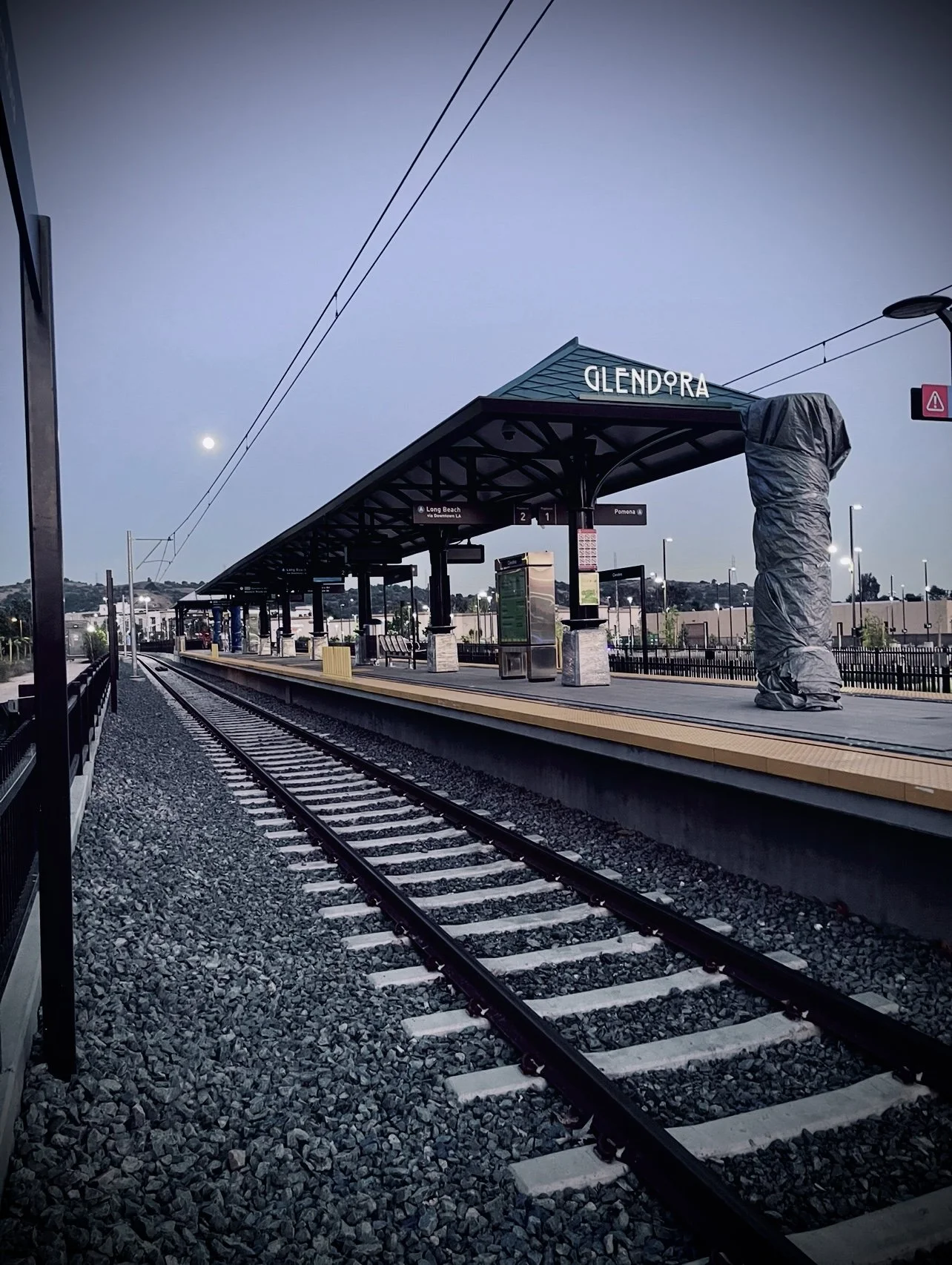
So you’re saying you bounced me into THIS market?
Once again, we’ve been thrust into a situation where we are existing on one income. Stretched every month. Clinging to hopes a job will materialize soon and limit the damage.
This phase often feels like waiting at a stop with no trains in service.
Part 4 in this series.
I was a late convert to grad school, exiting a freshly minted doctor of writing in the summer of 2010. Yep, that 2010.
Dead center in the throes of the Great Recession, I found a job and lost all the equity my wife and I had built after nine years in houses we had scraped our way into. We also ran up extra debt that would take a decade to pay off.
I think about that period a lot, mostly because we’ve never been able to get back into a house of our own. Two educators with three kids and no family money for a down payment who landed in Southern California, we’ve settled into the reality that we will likely never own again.
What does this have to do with my current unemployment? Everything.
Once again, we’ve been thrust into a situation where we are existing on one income. Stretched every month. Clinging to hopes a job will materialize soon and limit the damage.
Unfortunately, it’s likely my prospects are even more terrible than in 2010, when I found a proverbial full-time needle in the creative writing haystack. The economy is in deeper trouble than it was then.
And starting a third career in something other than higher ed—already a daunting task—is an even more difficult a project than it otherwise would be.
I maintain hope. I have to. But the echoes of this cycle repeating are a weight I must shed each morning as I get up to tackle another day of looking for work.

Employment…history?
I’m well aware jobs don’t dictate our identity, but they do provide the pattern across which we stretch ourselves, the outlet through which we enact our character, and the most consistent subject outside of family and faith we define our worth in reference to.
Hard to believe, but until now I’d been working since I was younger than them.
Part 3 in this series.
When I was 12 years old, I started working regularly for the first time. Before images of factories and truancy notices pop into your head, my first “job” was manageable.
Every other Saturday morning, I mowed three and a half acres of open land owned by the church my dad pastored on a riding mower. Within a couple months, a couple of families were also paying me to mow their yards.
That same year, a family friend who ran a janitorial business hired me to take care of a preschool building he had a contract to clean. It was a night job—Mondays, Wednesdays, and Fridays— and I did the light work. Empty the trash cans, mop the bathrooms, clear the sidewalks of dirt with a blower. And hour or so each time for which I was paid $10.
These oddest of jobs marked my entry into the work world and, in one way or another, I have been employed ever since. At least, I had been until I was laid off by my university.
From that first work landscaping I went to selling Greek food at the Del Mar Fair to doing paid phone research to valeting cars to collecting money in the Carl’s Jr. drive thru back to janitorial work to the dish room to the earliest of my “college-appropriate” jobs.
In sum, I haven’t been out of work since before I became a teenager, haven’t left a job without the next one already lined up. To say getting ejected into unemployment has had a seismic impact on my sense of self is absolutely accurate.
I’m well aware jobs don’t dictate our identity, but they do provide the pattern across which we stretch ourselves, the outlet through which we enact our character, and the most consistent subject outside of family and faith we define our worth in reference to.
So, to be without that part of my life—less a gaping hole than a familiar picture thrown so out of focus it represents nothing of substance—is more than alien.
It’s an unfamiliar language I’m expected to speak. It’s learning to dance after an injury. It’s being left at a bus stop in the middle of nowhere near the familiar streets you thought you were traveling.
I’m left wondering where I will land. If I will land. Even if I get a job back in the classroom, my world has been altered in ways I think I’ll spend the rest of my career adjusting to.

Laid off? Laid Off.
And that was it. Ten minutes and my future became punctuation: less an interrobang, more a merger of a hard-stop period and lingering question mark.
When one door closes…sometimes it just stays closed.
Part 2 in this series.
The meeting lasted just over four minutes. The guy who swung the axe—our fourth interim dean in as many years—asked to confirm who I was before we walked into his office. The HR professional already seated at the table wore an appropriately grim expression.
“Well, I’ll get directly to it. Your contract will not be renewed at the end of this year. We’re sorry, but it’s a financial decision.” He paused and turned a couple of pages. “You simply don’t fit the direction the school is headed.”
And that was it. A couple of notes on how I would receive the news in writing. The obligatory “Do you have any questions for us?”
I did not. What answers of substance could two people who didn’t know me before that moment offer?
Ten minutes and my future became punctuation: less an interrobang, more a merger of a hard-stop period and lingering question mark.
After 11 years, the school I’d been called a critical employee of had let me go. My alma mater, no less. A place whose students had voted me the faculty member of the year for the work I did the semester a pandemic ground the world to a halt.
The whiplash of how depersonalized that most personal of moments had been still stings when I think about that day. I know I’m not special. Millions of layoffs have happened in the same season as mine.
But, as Viktor Frankl wrote in Man’s Search for Meaning, whatever the original size of our misery is, it expands to fill our emotional sense of the world. Eight months and dozens of rejections later, I’m still circling the moment, looking for some way to let it go.
But it clings to me and I’m beginning to wonder if even a new job will help me shed these feelings of failure and being failed I definitely didn’t ask for or earn.

“Take it on faith, take it to heart, the waiting is the hardest part…”
If only it was as easy as following our leash back to our board and climbing back on.

Photo by Katie Moum on Unsplash
Part 1 in this series.
Losing my job and being thrust onto the job market at this stage in my life has been…disorienting to say the least. I’ve had a pretty solid sense of my professional identity for a long time now, but that’s been sucked into turmoil I didn’t ask for.
To be clear, I know I’m not special. Millions of us are out here in the boil and undertow of this process, looking to make our way to the surface and paddle in.
If only it was as easy as following our leash back to our board and climbing back on.
In the confusion and stress of looking for work in THIS economy, I’m doing what writers do. I’m stress writing to try and make sense of this stage. More than a journal but less than a user’s guide, I’m simply looking for ways to put my rushing thoughts to some kind of use.
After writing the first few of these things, I thought it might be of interest to other people. Not as an advice column (given, what the hell do I know?). Not an inspirational set of thoughts (though some ideas might feel hopeful). Not a story with a prescribed plot (I mean, I’m still living this as I write these).
Maybe this really is just for me. Or maybe it will help other people feel less alone in the middle of the process.
Either way, I’ll run out the string of these passages on my socials and blog, if for no other reason than to say I was here and I lived this. If you decide to follow along, welcome. Sorry it made so much sense to stay, but thanks for staying, nonetheless.
Note: Please enjoy the title of this piece in its original context.

The Remembering Room
I remember thinking of Octavia Butler. Of Jamaica Kincaid. And, yes, of Bradbury. Her words aren’t ornamented, they’re precise. Her stories aren’t bombastic, they’re subtly moving. Her themes aren’t sleeve-worn, they’re tailored into the cuffs and inseams of her characters’ choices.
Yesterday, a good friend of mine, Kathryn Ross, finally got to announce some big news she’s had to sit on for a long time. Her story, “The Forgetting Room,” has been selected—in a perfect stroke of fate by Nnedi Okorafor—to be included in the 2025 edition of The Best American Science Fiction and Fantasy.

I’m not saying you should pre-order your copy so much as I’m saying go pre-order your copy. Now.
This selection a huge moment for Kathryn that’s so well deserved. It’s also the product of a lot of effort over a long time, as most stories in writing success tend to be.
Eleven years ago, I returned to my alma mater to teach creative writing. No one was more surprised by that professional development than me (except maybe the professors who’d had me as an undergrad and then had to refer to me as a colleague). That first year, I had the chance to work with an unusually strong group of writers at the tail end of their undergraduate studies.
In essence, I was spoiled. They were and are a gifted bunch whose work has gone on to inspire me back to my own words in the decade since they sat in the desks of my classroom.
One of those writers I mentored is Kathryn, a person I now count as a close friend and trusted reader (as evidenced by the fact that she is one of only four people who have read my WiP). She’s an accomplished author of nonfiction (see: Black Was Not a Label) and poetry (see: Count It All Loss) as well as an editor, coach, and ghost writer. She can, quite literally, do it all.
But when I met her, she was all about science fiction. I remember one of our first conversations when I asked who her favorite author was. Quiet and thoughtful, as usual, there was uncharacteristically very little of the characteristic pause I’ve come to recognize in most of her responses to my questions over the years.
“Ray Bradbury,” she said immediately. “His stories are so good.”
I nodded in agreement even as I’m sure I shot a surprised eyebrow. Bradbury is indeed phenomenal. But he was definitely not in vogue with most of the young writers I worked with during that period. I was intrigued.
Later, in my advanced creative writing course, Kathryn brought in one of her own science fiction short stories for workshop. I remember thinking of Octavia Butler. Of Jamaica Kincaid. And, yes, of Bradbury. Her words aren’t ornamented, they’re precise. Her stories aren’t bombastic, they’re subtly moving. Her themes aren’t sleeve-worn, they’re tailored into the cuffs and inseams of her characters’ choices.
At the time, I remember being encouraging. Pushing some sections to be tighter. Asking more of a couple elements. Mostly finishing strokes, no demands to paint over what was already on the canvas. I honestly don’t remember if that story ever got published (though I feel like it must have been at some point).
Interestingly, Kathryn’s attention turned to nonfiction in the years after she finished her undergraduate studies. First essays, then a memoir I was gifted the chance to edit for her. Then producing a collection of poetry. Then building a business as a freelancer. But always, her first love stayed in the picture.
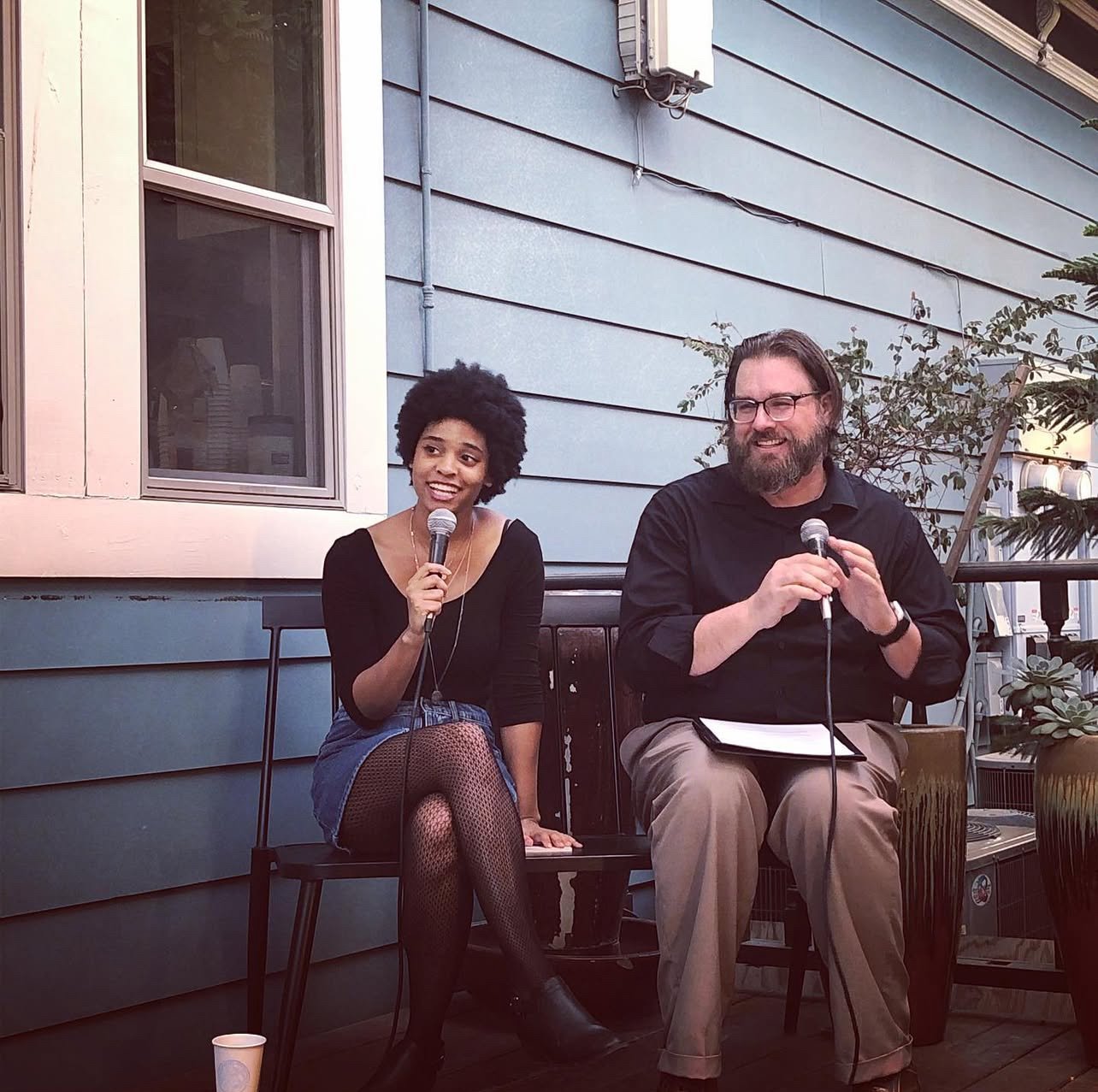
Kathryn and me at the launch of her memoir, Black Was Not a Label. Editing her book still ranks as one of my favorite experiences working with writers. Acting as MC for the launch? Yeah, that was pretty great too.
During the pandemic, I watched a live-streamed address Kathryn gave through the Bradbury Center, a literal life goal being checked off her list, and wondered if the experience had her thinking about her fiction again. Being the nosy former teacher I am, I asked her about it the next time we grabbed coffee. She said yes, but life was chaotic (for us all) and she was busy.
I may have “encouraged” her to find the time. What can I say? Even writers with her level of talent need to be reminded the rest of us really do want the stories that talent can unearth. And who am I if not an irritating voice of reminder to the talented people in my life?
And now, a big, broad audience is about to be introduced to Kathryn’s fiction. And well they should be, because of her talent, for sure, but also because she has worked so hard to let her stories insist on being taken seriously. I hope this leads to more opportunities for people to read her stories, to contend softly with the hard world we live in as her characters do theirs.
Mostly, though, I’ll celebrate every time a good person gets their due respect. Pre-order the collection and check out “The Forgetting Room.” Maybe it will inspire you to write your own stories. Or read more good ones.
Either way, remember the name Kathryn Ross. You’ll be hearing from her again.